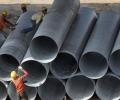
The festive season will mean business for the steel industry as it is the time when automotive and consumer appliance companies bump up demand to prepare for higher sales, experts have said. Ranjan Dhar, chief marketing officer at ArcelorMittal Nippon Steel India (AM/NS India), said that bookings by auto and consumer appliance industries are 20 per cent higher ahead of the festive season compared to last year. "While this could be for a couple of months, it could normalise later at approximately 10 per cent," he said.

Maruti Suzuki India said its domestic sales rose 10.6 per cent in May.
The edge that Maruti Suzuki enjoys over Hyundai and other rivals stem primarily from its gigantic scale, reports Ajay Modi.
Mandates have been handed out to staffing solutions companies such as Randstad India and TeamLease, officials at these firms have said, as players increasingly push into rural areas to capitalise on the uptick in the hinterlands.

India's production-linked incentive (PLI) scheme, which aims to make domestic manufacturing globally competitive, has attracted investment worth over Rs 45,000 crore and has also created three lakh jobs, NITI Aayog CEO Parameswaran Iyer said on Monday. The government has rolled out the scheme with an outlay of about Rs 2 lakh crore for as many as 14 sectors, including automobiles and auto components, white goods, pharma, textiles, food products, high efficiency solar PV modules, advanced chemistry cell and speciality steel. "The PLI programme has already started showing results.

Car sales in India surged by 12.87 per cent in December.
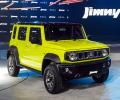
Jimny will be priced between Rs 12.7 lakh and Rs 15.05 lakh.

Those involved in the discussions say the guidelines for selection of bidders in insolvency cases need to be transparent, otherwise anyone who loses out could take legal recourse, leading to wastage of time and derailing the whole process.
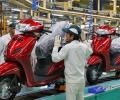
Honda Motorcycle and Scooter India (HMSI), the country's second-largest two-wheeler manufacturer, is planning to launch its first electric vehicle (EV) here by March next year, said CEO & MD Atsushi Ogata on Monday. The company would also enter the low-end motorcycle market in March by launching a 100cc engine bike at a price that will "positively shock" customers, he said while speaking with reporters, after launching the Activa with Honda Smart Key. HMSI's first EV, an electric scooter, will have a fixed battery and the second model will have two swappable batteries, Ogata explained.

Dealers across brands are slashing prices by Rs 20,000 to over Rs 1 lakh, depending on the car model.

Automobile dealers' body FADA on Tuesday expressed concern that the chip shortage issue could derail passenger vehicle (PV) retail sales during the festive season, as automakers are struggling with an adequate supply of vehicles to dealers due to production challenges. Terming semiconductor shortage as a "full-blown crisis", the industry body warned of a lacklustre festive season, especially for the passenger vehicle dealer fraternity, with low inventory levels and non-availability of the fast-moving model variants ahead of the peak festive period.
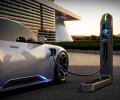
At Prestige Polygon Towers in Chennai's Teynampet, hectic preparations are on for a mega global investors' meet under the aegis of Guidance Tamil Nadu (the state investment promotion agency) scheduled for January 2024. Asked about the key focus areas of the meet, the agency's managing director and chief executive officer, V Vishnu, said the state was betting big on electric mobility. This is no surprise, given that the state has signed electric vehicle (EV)-related memorandums of understanding (MoUs) with several companies in the recent past that may bring in investments worth around Rs 33,000 crore with the potential to create over 43,000 job opportunities.

After the hit of the pandemic, India Inc is now worried about the adverse impact of inflation and higher commodity prices on their revenues and margins. The inflation scare is the strongest among manufacturers of consumer goods such as automobiles, consumer durables, and fast-moving capital goods (FMCG). Companies across sectors fear they will not be able to pass on the hike in input costs to their consumers due to weak demand, which, in turn, would lead to a hit on margins and profitability in the forthcoming quarters.

Analysts have predicted a 23 per cent volume growth for the auto segment between FY22 and FY25, riding on the company's differentiated EV and SUV plan. M&M is already a market leader with a 36 per cent share in electric three-wheelers, and its Zaheerabad plant in Telangana is ready to cater to demand. In the farm segment, the company plans to focus on niche electric products.

The promoter entities of JSW Group are in talks with several electric-car manufacturers in China to launch an electric car for the Indian market at Rs 15-20 lakh, a source close to the development said.

State-owned Indian Oil Corporation (IOC), Adani-Total Gas Ltd and Shell were among the 29 companies that bid and bought natural gas to be produced from the deepest field in the KG-D6 block of Reliance Industries Ltd and bp, sources said. IOC walked away with almost half of the 6 million standard cubic meters per day of gas sold in an e-auction on Wednesday while state-owned gas utility GAIL bought 0.7 mmscmd, Adani-Total Gas Ltd 0.4 mmscmd, Shell 0.5 mmscmd, GSPC 0.25 mmscmd and IGS another 0.5 mmscmd, two sources with knowledge of the matter said. Reliance-bp on Wednesday held an e-auction for sale of gas from the MJ field in their eastern offshore KG-D6 block after incorporating the government's new marketing rules to give CNG-selling city gas companies first priority over supplies.

Sales of commercial vehicles were up 11.45 per cent to 56,840 units in December 2015.

Earnings growth is unlikely to see much recovery and sales revenues are also likely to remain muted
State governments need to focus on building charging infrastructure to realise the goal of transitioning a large proportion of their sales to EVs, reports Ishaan Gera.

Other major laggards were IndusInd Bank, SBI, Bharti Airtel, ONGC, Tata Steel and Reliance Industries -- falling as much as 6.30 per cent.
Indian Oil Corporation (IOC), the nation's largest oil firm, has walked away with half of the natural gas that Reliance Industries Ltd and its partner bp of the UK offered in the latest auction of the fuel used to generate power, produce fertilizer, turned into CNG and used for cooking purposes. IOC got 2.5 million standard cubic meters per day out of the 5 mmscmd of gas auctioned last month, sources with knowledge of the matter said. The oil refining and marketing company, which was the top bidder even in the previous auction of gas from the eastern offshore KG-D6 block of Reliance-bp, bid the volumes on behalf of seven fertilizer plants.

Maruti recorded 20 per cent jump in sales during November.

Investors became richer by over Rs 2.27 lakh crore on Monday as equities rebounded, with the BSE Sensex rallying over 1 per cent amid continuous foreign fund inflows and upbeat global markets. The 30-share BSE Sensex jumped 709.96 points or 1.16 per cent to settle at 61,764.25. During the day, it zoomed 799.9 points or 1.31 per cent to 61,854.19. Following the rally, the market capitalisation of BSE-listed firms jumped by Rs 2,27,794.46 crore to Rs 2,76,06,443.06 crore.
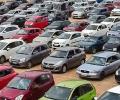
Automobile retail sales in the country fell 18 per cent year-on-year in the 42-day long festive period this year as semiconductor shortage impacted production across companies affecting their ability to supply adequate numbers to dealer partners, FADA said on Thursday. During the period under review, barring three-wheeler and commercial vehicles, all other segments including passenger vehicles, two-wheelers and tractors were down as compared with the same period of last year. As per data collated by the Federation of Automobile Dealers Associations (FADA), total retail sales across segments stood at 20,90,893 units this festive period, down 18 per cent from 25,56,335 units in 2020.
Leading microchip providers Qualcomm and Intel say the chip shortage might last anything between four months to a year, perhaps even two years, depending on the various product categories - mobile devices, ICE, electric vehicles, appliances, data centres. Prakash Mallya, MD, Intel India and vice president, sales and marketing and communications group, said the spike in demand was huge, and cut across segments from PCs, phones, appliances and auto leading to the shortage.
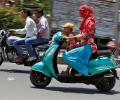
Two-wheeler exports from India fell by 17.8 per cent to 3.65 million units in 2022-23 (FY23), according to data released by the Society of Indian Automobile Manufacturers (Siam) on Thursday. This decline is due to a rise in global inflation and the weakening of economies and currencies in key export markets of Africa, Latin America (LatAm), and South Asia. In contrast to FY23, two-wheeler exports from India jumped 35.4 per cent to 4.44 million units in 2021-22 (FY22).

Bucking the overall downtrend, shares of RIL rallied nearly 10 per cent, capping the Sensex loss to a large extent.
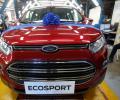
Ford, which had announced to quit the Indian market last year, said it was exploring the possibility of using one of its plants in India to produce electric cars for exports.
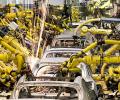
The passenger vehicle dispatches to dealers increased by 11 per cent in July as improvement in semiconductor supplies helped the companies to ramp up production ahead of the festive season, auto dealers' body SIAM said on Friday. Overall passenger vehicle wholesales increased to 293,865 units last month compared to 264,442 units in July 2021. Passenger car dispatches rose 10 per cent to 143,522 units in July from 130,080 units in the year-ago period.

The company had identified some emission-related issue with Tavera and some quality issue with Sail.

Its studies have shown that the spending patterns of consumers -- particularly decision-makers -- can be influenced to a large degree with great deals, strong brand presence on the Internet, and productive person-to-person interactions.

The Tata Tech IPO will be the first from the Tata group since TCS listed its shares in 2004.
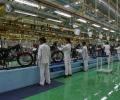
TVS Motor Company, on Wednesday, overtook Hero MotoCorp in terms of market value to become the sixth-largest automobile company on market capitalisation. he former's m-cap now stands at Rs 51,681 crore to the latter's Rs 50,951 crore. Bajaj Auto, with Rs 104,872 crore, is the only two-wheeler manufacturer in the top five. Shares of TVS have rallied 73 per cent this year while shares of Bajaj and Hero have risen only 3 per cent and 10 per cent, respectively. While sales, net profit and market share of TVS are lower than that of Bajaj and Hero, there are multiple triggers for the company.

If Volkswagen's sales were to plunge in North America in the coming months, this would not only have an impact on the company, but on the German economy as a whole.
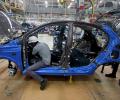
Automobile industry in India is going through a long-term structural slowdown as the compound annual growth rate (CAGR) across all major vehicle segments has witnessed a decline over the last three decades, as per industry body SIAM. The auto industry has been facing headwinds even before the COVID-19 pandemic derailed the entire sector last year, a research conducted by the Society of Indian Automobile Manufacturers (SIAM) has revealed. The study clearly shows that the pandemic is not the only reason for the auto sector slowdown, which is facing deeper structural issues that need attention, the industry body noted.
Issues like high insurance cost and the announced price hike effective January could also weigh on sales in 2019. The only bright spot is the softening seen in fuel prices over the past month.

Chinese automakers Great Wall Motors, FAW Haima Automobile, and Changan Automobile, after dithering about entering India for some years, have been encouraged by the robust sales performance of the late entrants Kia Motors and MG Motors even in a slowing market.

CURVV, currently in its production-ready avatar, will first be made available as an electric vehicle, to be followed by its internal combustion engine counterpart.

India can become the number one automotive manufacturing hub in the world within five years, but auto companies need to enhance safety features to reduce deaths due to road accidents, Union Minister Nitin Gadkari said on Thursday. In his inaugural address at the Auto Expo 2023 here, the minister for road transport and highways asserted that the government's target is to reduce these accidents by 50 per cent before the end of 2024 while asking the auto industry to take suo moto action for road safety as the government doesn't want to make anything mandatory. Gadkari's sentiments were also echoed by Minister of Heavy Industries Mahendra Nath Pandey, who lamented that while India has only 1 per cent of the total overall vehicles, the country accounts for 11 per cent of the total global deaths due to road accidents.

Open order books in February breach 700,000; wait period for some models exceed a year.
